Mystic Cards Welcomes Its First Artist Partner!
A new deck on the shelf, a cross-collab horoscope section on this site, and the app that's been eating my evenings.
Lately I've been working on a mobile app called Filchy, and I'm teasing a Google Play launch early next month. I'll be honest about the date: everything is waiting on Google, and they've already had it longer than I expected. But before the app takes over this blog, I wanted to stop and celebrate something that happened on the web side first.
Mystic Cards has its first artist!
Meet Amalia
Amalia is the first independent artist to put decks on Mystic, and she showed up with four of them, three in the Lenormand tradition and one oracle style. There's an extended 44-card version of Secret Signs of Fate that adds eight new symbols to the classic 36 (Time, Bridge, Dice, Mask, Well, Compass, Labyrinth and Magnifying Glass), plus Fairy Tale and Art Nouveau editions, and Lenormand Academy, which is built to teach you the cards while you read them.
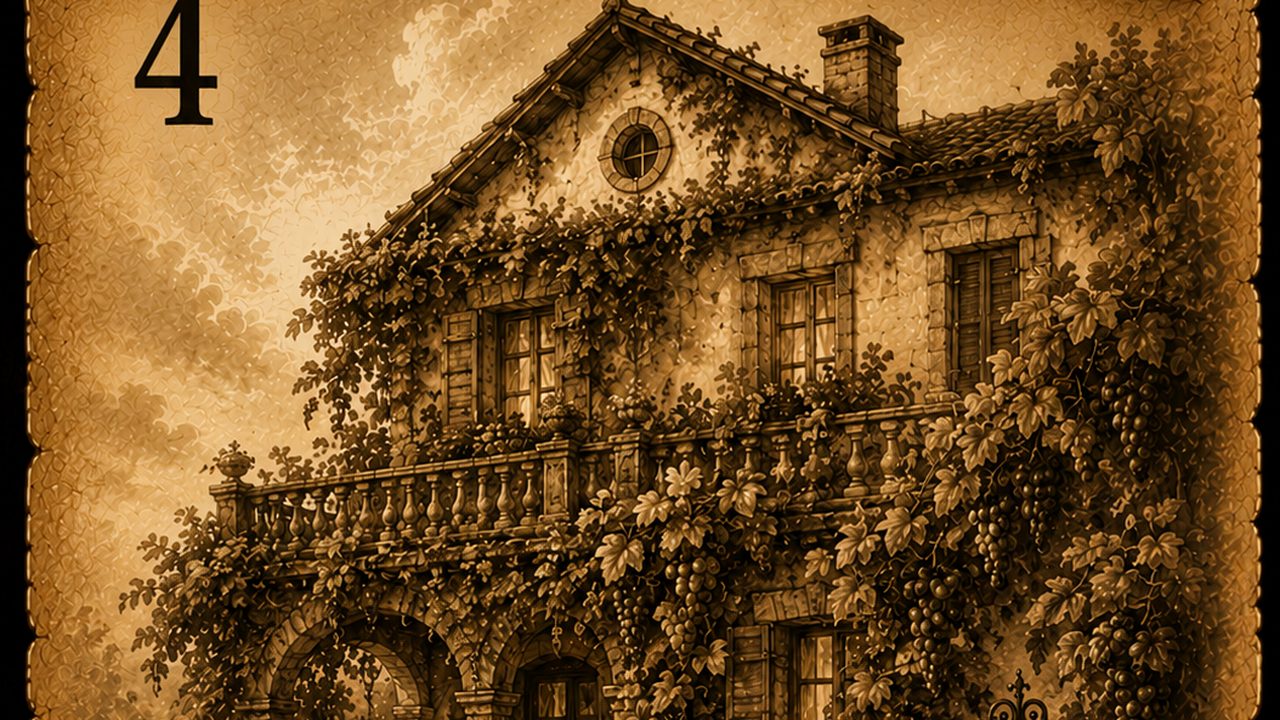
The House card from Secret Signs of Fate, art by Amalia von Hohenberg. See the decks.
The whole point of the artist side of Mystic is that a person who makes something beautiful can sell it directly and keep 70% of every sale. For a long time that was a promise on a page. Now it's a person with real decks, and it feels different.
I added a new astrology section to this site as a way to celebrate
Mystic has always published a small public API ~ I used it while I was hiking the PCT to generate content for my OpenClaw bot to publish on socials. Since that's been unplugged, I thought I'd put it to use again. If you scroll the home page you'll find a row of twelve zodiac signs. Click yours and you get this week's horoscope, pulled live from Mystic. You can also browse the full set at /horoscope.
It's weekly rather than daily, because that's what the API offers, and it's AI-generated, so treat it as entertainment. But I like having a little corner of my portfolio that speaks to my interest in astrology. I read it myself every week to bring in some self reflection.
More on the mobile app
Here's where Filchy comes in. Filchy is a tarot and I Ching app built around one idea: the reading experience comes first. No ads on the free tier, no nagging, and plenty of features, and it should be easy whether you've read tarot for twenty years or have never held a deck.
The thing I'm proudest of from Mystic, and the part that carried over most cleanly, is the interpretation. Without getting too deep into it, a good reading comes down to what you hand the reader:
- The cards in their positions. A card in "the past" means something different from the same card in "the challenge," so each one arrives with its position, its keywords, and its traditional meaning.
- Your actual question. Not a generic reading, but one about the thing you asked.
- The deck's personality. An artist can describe the voice of their deck, and the reading leans into it. This matters a lot now that Mystic has artists with their own point of view.
- A little restraint. The default tone is warm and encouraging, like a trusted advisor, honest about challenges without doom and gloom.
Readings also unfold as you flip cards. Each new card is interpreted on its own while remembering what came before, then everything is tied together at the end. And because the question you type and the text artists write both end up inside the instructions, the reader is told to treat them strictly as information, never as commands. Someone's deck description shouldn't be able to take over a reading.
None of that was glamorous to build. It was a lot of small decisions, tested over and over. But it's the part I didn't have to reinvent for Filchy, and that let me spend my energy on everything around it.
Why the Name Is Different
Mystic never felt like it had a strong brand to me. "Mystic Cards" is generic. That was fine at the time. I wanted to get to building, and I figured a more specific idea would come later. Filchy is that idea, with a name and a look and concept that's more directed. Essentially it's a more focused mobile iteration on my original concept that gave me Mystic, building on the experience and assets that Mystic delivered.
Mystic Isn't Going Anywhere
I have no plans to abandon Mystic. The plan is the opposite: once Filchy has established itself, I want to bring the artist pipeline over to it, so people like Amalia can reach readers in the app too.
For now, say hi to your sign on the home page, look at Amalia's decks, and keep an eye on Filchy. More soon.